
A door lock can often be repaired when its cylinder, latch, strike plate or operating hardware can be restored safely. If the lock is badly worn, damaged or incompatible with the door, replacement may be the better option. The right choice depends on what happens when the key turns and how the door fits its frame.
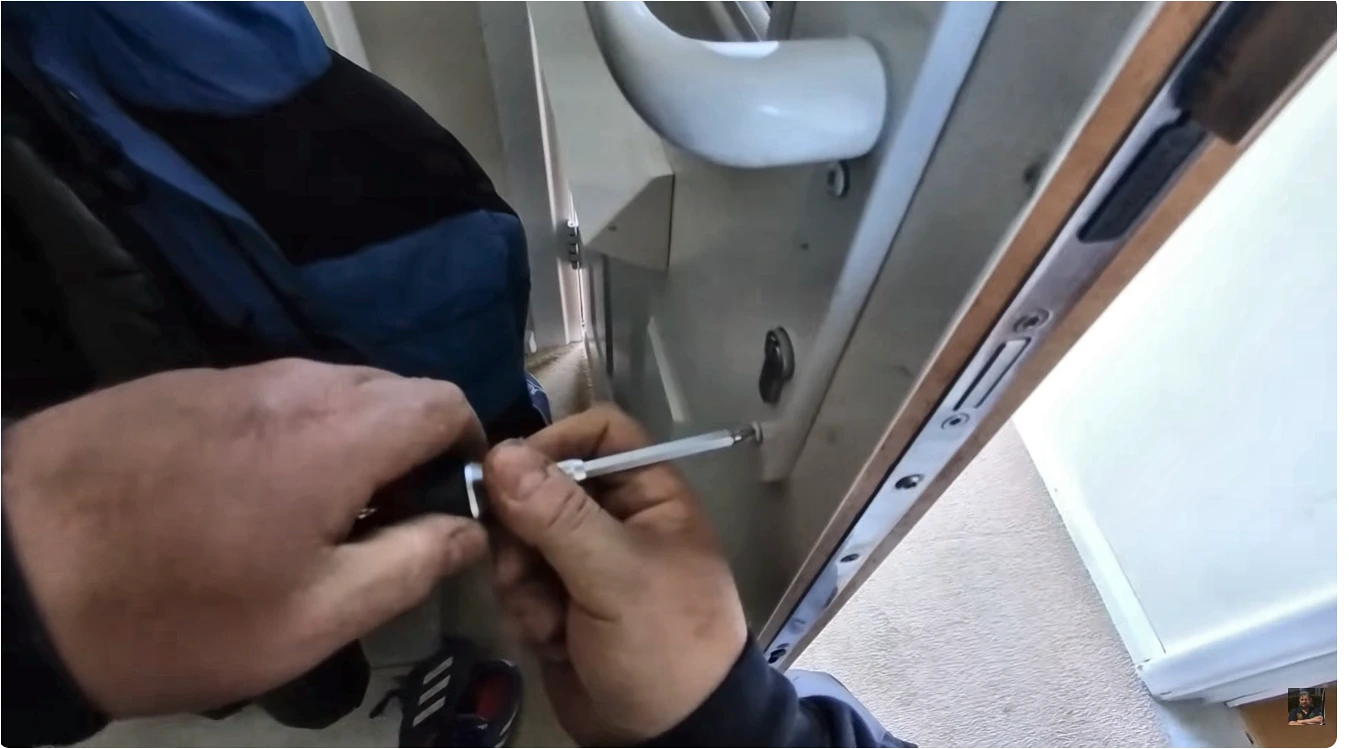
What's wrong with your door lock?
Start with the symptom. A sticking key, a jammed deadbolt and a door that won't latch are different problems. They can feel similar from outside, but the repair—and the price—may be very different.
| What you're noticing | What should be checked |
|---|---|
| The key is hard to turn, even with the door open. | Key wear, cylinder condition, keyway obstruction and the lock's internal mechanism. |
| The deadbolt turns easily with the door open but binds when it's closed. | Door alignment, hinges, strike-plate position and whether the bolt has room to extend. |
| The handle moves, but the latch doesn't retract properly. | The latch assembly, lever or knob linkage, spindle and mounting hardware. |
| The key spins without operating the lock. | The connection between the cylinder, tailpiece or cam and the locking mechanism. |
| The keypad lights up, but the deadbolt won't move. | Battery and power condition, bolt alignment, programming and the lock manufacturer's diagnostic guidance. |
| A storefront or office door won't stay shut. | The latch, strike, hinges, door closer and any commercial or exit hardware that may require specialist attention. |
Can a locksmith fix a lock that won't turn? Sometimes. What matters is whether the problem is inside the cylinder, elsewhere in the lock or at the door and frame. Forcing a reluctant key or handle can turn a repairable issue into broken hardware.
Lock repair, rekeying or replacement: which do you need?
These services solve different problems. Asking for the right one up front helps a technician identify the scope and provide a more meaningful estimate.
| Service | Best suited to | What it doesn't solve |
|---|---|---|
| Lock repair | A malfunctioning deadbolt, latch, cylinder, handle or door-hardware connection that is serviceable. | A lock that is beyond reliable repair, or a security upgrade that requires different hardware. |
| Lock rekeying | Changing which keys open a compatible lock after a move, lost keys or a change in authorized users. | A damaged latch, loose door hinges or a worn-out lock mechanism. |
| Lock replacement or installation | Severely damaged, outdated, incompatible or unsuitable locks that need new hardware. | Underlying door alignment problems unless the door or strike is also addressed. |
Should you replace a lock just because the key sticks? Not automatically. The lock and door should be checked first. Equally, a new cylinder alone may not help if a sagging door is causing the bolt to catch.
Deadbolts, cylinders, latches and strike plates
Many common house lock problems involve more than the keyhole. A deadbolt has a bolt that needs to extend fully into an opening in the door frame. A spring latch has to retract when the handle turns and seat correctly in the strike when the door closes.
During an assessment, the important checks may include:
- Deadbolt and latch operation: whether the parts move smoothly and seat fully, without force.
- Cylinder and key condition: whether the correct key operates consistently or the cylinder shows wear or damage.
- Strike plate and doorjamb: whether the receiving opening aligns with the latch or bolt.
- Hinges and fasteners: whether looseness or a shifting door is affecting how the lock meets the frame.
- Knob, lever and spindle: whether the handle moves the latch as intended.
Lock manufacturer Schlage recommends testing deadbolt operation with the door open and closed; a bolt that drags only when the door is shut can indicate a door or strike-alignment issue. If the door is already insecure, do not leave it unattended while trying to make the mechanism work.
What if it's an electronic or smart lock?
An electronic deadbolt can have two overlapping problems: the electronics that authorize access and the mechanical bolt that secures the door. A keypad that appears to work does not prove the bolt can move freely. A fresh battery won't correct a strike plate that obstructs the bolt; adjusting the door won't repair failed electronics.
Tell the locksmith the manufacturer and model if you know them, whether the keypad responds, and what happens when you try the lock normally. Avoid sharing door codes publicly. A qualified provider should follow the model's instructions and explain when repair, manufacturer support or replacement is appropriate.
Santa Fe doors face more than one season
Santa Fe has a semiarid, high-elevation climate. Winter brings freezing temperatures and occasional snow; summer has afternoon thunderstorms. Those conditions can be relevant to exterior doors, hardware exposure and how a door fits its frame, although weather is not proof of what caused a particular lock to fail. TOURISM Santa Fe describes the area's seasonal weather.
A stiff exterior lock may involve a worn key or internal parts rather than the cold alone. A door that rubs or fails to latch may have alignment, hinge or frame issues. It's worth describing when the problem started and whether it happens consistently or only at certain times.
Lock repairs around Santa Fe neighborhoods
A home off Canyon Road or the Historic Eastside may have different entry hardware from an apartment near the Railyard and Guadalupe. Storefront doors along the Cerrillos Road corridor also have different usage and security requirements from residential deadbolts. Neighborhood names help with directions, but they don't determine what work a specific lock needs.
For a service request, provide the actual address, building entrance, door location and whether the property has a gate or access procedure. Santa Fe ZIP codes including 87501, 87505 and 87507 can help orient a caller; a full address is still essential. Explore Santa Fe locations and confirm the provider's actual coverage before scheduling.
What about a business door that won't lock?
Commercial entrances may have mortise locks, storefront cylinders, closers, exit devices or access-control hardware. The right repair can depend on the complete door assembly, not just the cylinder. If an emergency exit or fire-rated door is affected, it needs careful review by a qualified specialist so the proposed fix doesn't compromise safe exit or a listed assembly.
The ANSI/BHMA door-hardware standards distinguish among residential locks, mortise hardware and other door systems. For office or retail work, see our commercial locksmith service guide.
When should a broken lock be treated as urgent?
If a door won't secure, tell the locksmith that the property cannot currently be locked. If an essential exit cannot be opened safely, don't improvise a repair that blocks egress. If anyone is trapped in an immediate emergency, call 911 rather than relying on an ordinary locksmith appointment.
For a locked-out household with no immediate danger, start with the house lockout page. For a door that can still be operated but won't latch or bolt consistently, explain that specific symptom when you request help.
How much does lock repair cost in Santa Fe?
There is no single price that fits a jammed deadbolt, a simple strike adjustment and a worn commercial lockset. The total can depend on the service call, diagnosis, labor, replacement components, specialty hardware and whether the appointment is after hours.
Before approving a repair, ask whether the estimate covers inspection, labor and materials, and what happens if the lock turns out to need replacement. A provider should explain added costs before changing the scope. For a full checklist, see locksmith pricing in Santa Fe.
What to have ready when you call
- Where the door is: street address, unit, building or store entrance, and the neighborhood or nearest cross street.
- What isn't working: key sticks, bolt won't extend, handle feels loose, door won't latch, or keypad doesn't respond.
- Type of hardware: ordinary deadbolt, knob or lever, mortise lock, smart lock or commercial hardware, if known.
- When it fails: only with the door shut, every time, or intermittently.
- Authorization: proof that you own or are authorized to request work on the property.
- Estimate questions: callout fee, likely labor, parts, timing and any additional charges.
You can also use Request Details to prepare a short written summary before contacting the business.
Lock repair FAQs
Can a locksmith repair a broken deadbolt instead of replacing it?
Often, if the problem involves serviceable hardware or door alignment. A damaged or severely worn mechanism may require replacement. The condition of the bolt, cylinder and door should be assessed first.
Why does my deadbolt work when the door is open but not closed?
That often points toward bolt and strike-plate alignment, hinges or door fit rather than the key cylinder alone. Avoid forcing the bolt; ask for the door and strike to be checked.
My key goes into the lock but won't turn. What should I do?
Don't twist it harder or risk breaking the key. Note whether the problem occurs with the door open or closed and whether a known working key behaves differently. A locksmith can assess the cylinder, key and related mechanism.
Can a damaged lock be rekeyed?
Rekeying changes which key operates a compatible cylinder; it does not repair broken latches or worn mechanisms. A damaged lock may need repair or replacement before rekeying makes sense.
Is a keypad lock repair different from a regular lock repair?
It can be. Electronic locks have power and control components as well as physical bolts. The manufacturer, model and exact failure determine whether diagnosis, adjustment or replacement is appropriate.
Can Santa Fe winter weather cause a lock to stick?
Cold and exposure can affect some doors and hardware, but the cause shouldn't be assumed. Key wear, alignment and damaged components are other possibilities. A proper diagnosis is better than forcing a stiff mechanism.
Do I need a locksmith or a carpenter if the door won't latch?
If the issue is limited to the lock, latch or strike alignment, a locksmith may be the right starting point. If the door or frame is structurally damaged, a door specialist or carpenter may also be necessary.
How do I get an estimate for lock repair in Santa Fe?
Provide the address, type of door and lock, the exact symptom and whether the property can currently be secured. Ask the provider to confirm availability and explain service-call, labor, parts and any after-hours charges.
Can a locksmith repair an office or storefront door lock?
Some locksmiths specialize in commercial door hardware. Verify qualifications for the particular mortise lock, closer, strike or exit device; work affecting emergency egress or fire-rated assemblies needs special care.